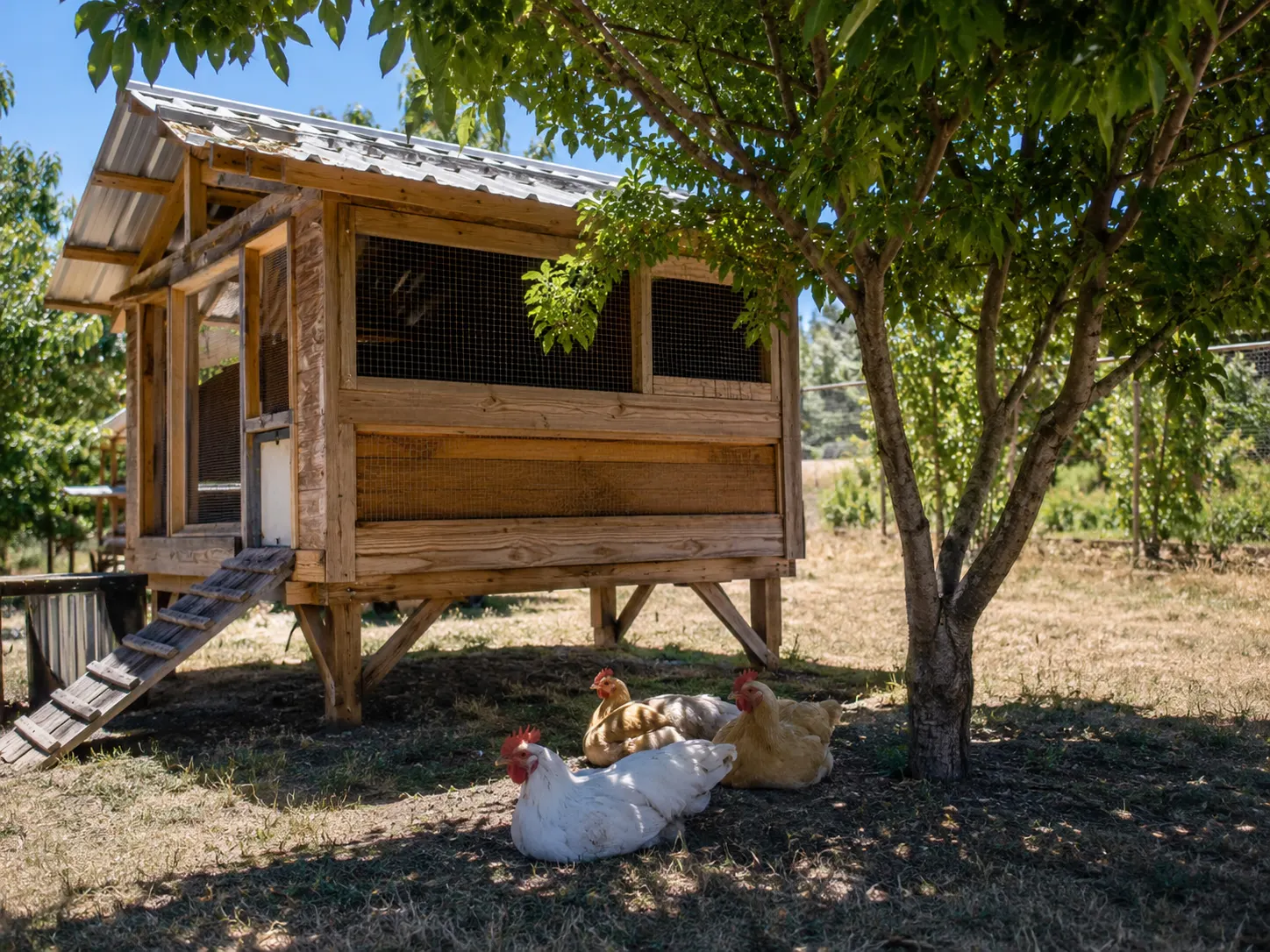
I almost lost a whole flock to a single August afternoon. I’d left for work on a morning that was already warm, and by the time I got home the thermometer on the coop read 104. Three of my hens were flat in the dirt under the run, beaks open, wings held away from their bodies, barely moving. I got them into a tub of cool water and they pulled through. One didn’t make it. That bird had survived an ice storm the previous winter without so much as a sneeze, and a hot Tuesday took her out by dinnertime.
If you’re keeping chickens somewhere hot, this is the thing to burn into your memory: heat is far more dangerous to chickens than cold. A healthy hen will shrug off a freeze that would send you running indoors, but she has no sweat glands and only a few clumsy ways to shed heat, and once her body temperature climbs past a certain point she can go downhill in a matter of hours. The coop you choose in a hot climate isn’t about keeping warmth in. It’s about getting heat out and keeping the sun off your birds, fast and constantly.
This guide covers what actually makes a coop survivable in the heat, gives you honest picks for different flock sizes and budgets, and walks through the cooling habits that keep birds comfortable when it’s brutal outside. I’ve kept chickens through long, punishing summers, and most of what follows came from paying attention after that August I’d rather forget.
Some links below are affiliate links. If you buy through one, I may earn a small commission at no extra cost to you. As an Amazon Associate I earn from qualifying purchases. I only point to gear I’d actually use with my own flock.
Heat is more dangerous than cold. Here’s why.
People spend the winter worrying about their chickens freezing, then relax in summer like the hard part is over. It’s backwards. Cold-hardy birds handle freezing temperatures with a good coat of feathers. Heat is the silent killer, and it works fast.
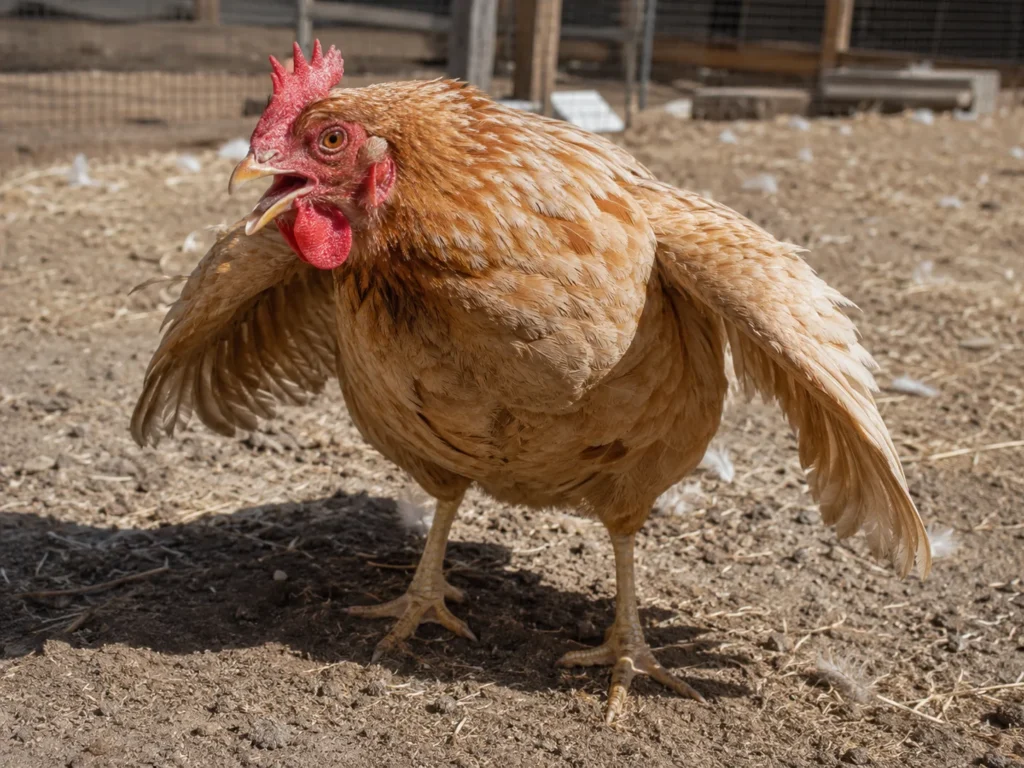
A chicken’s normal body temperature runs around 105 to 107 degrees, which is already hot. To cool down she can’t sweat, so she pants, holds her wings out from her body, and dumps excess heat through her comb, wattles, and the bare skin under her wings. Those are slow, limited tools. When the air temperature climbs into the 90s and beyond, especially with humidity, panting can’t keep up, and the bird’s core temperature starts to rise. That’s heat stress, and unchecked it becomes heat stroke, which kills.
Humidity makes everything worse. In dry heat, panting and a little evaporation buy a bird some margin. In muggy, sticky heat there’s no evaporation to help, so a humid 92 can be more deadly than a dry 100. If you keep chickens in the Southeast or anywhere with thick summer air, you have to plan for less margin than the thermometer suggests.
So the entire job of a hot-climate coop comes down to two things: keep the sun off the birds, and move as much air through their space as possible. Shade and airflow. A coop that nails both can be the difference between a flock that dozes through a heat wave and one you find collapsed in the dirt.
If you’re dealing with the opposite problem, freezing winters, the priorities flip almost completely, and I’ve covered that in a separate guide: [INTERNAL LINK: best chicken coops for cold climates].
What to look for in a hot-climate coop
The features that make a coop great in a hot climate are nearly the reverse of what you’d want in the cold. Here’s what matters when the heat is the threat.
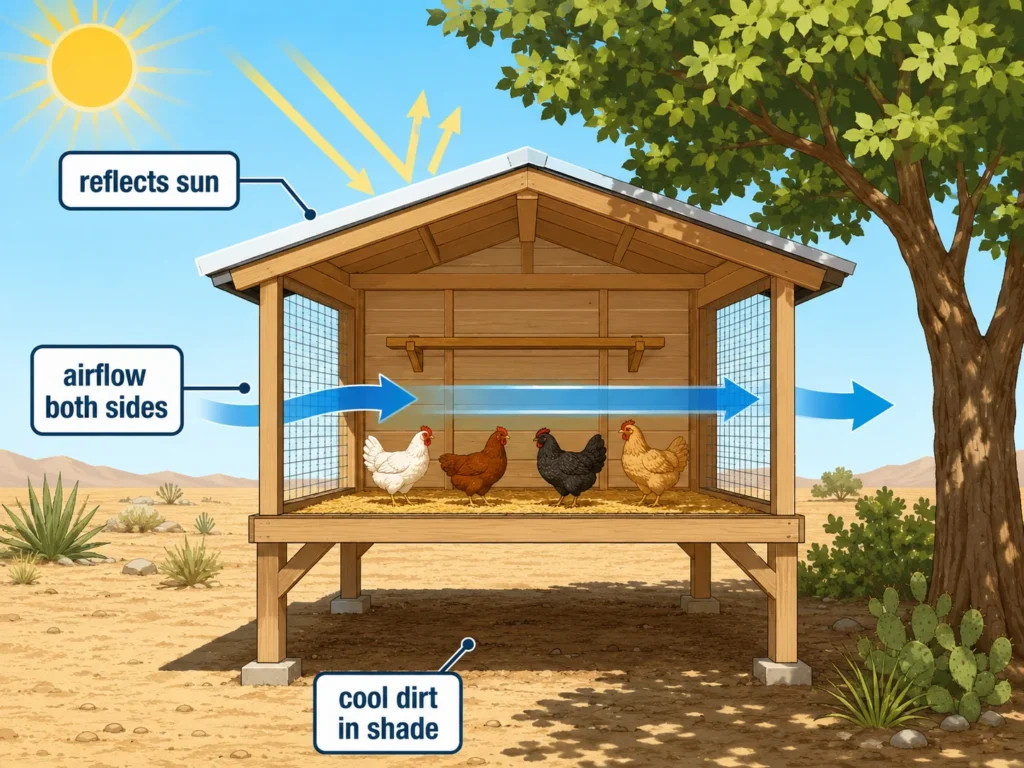
Maximum ventilation, the more open the better. In hot country you want airflow on every side, not a snug sealed box. Look for coops with large mesh or hardware-cloth panels rather than solid walls, ideally on opposite sides so a breeze can pass straight through. Cross-ventilation moves heat out the way nothing else can. Many hot-climate keepers run what’s essentially an open-air coop, with the sleeping area screened in hardware cloth on multiple sides and only the roof and a windbreak as solid surfaces.
Real shade, built in or sited for it. A coop sitting in full afternoon sun becomes an oven no matter how it’s built. The best hot-climate setups either include a roofed, shaded run or get placed where they catch morning sun and afternoon shade, under a tree or on the east side of a building. Shade is not a nice-to-have here. It’s the single most important factor.
A light-colored, reflective roof. Dark roofs soak up the sun and radiate heat down onto the birds. A light or metallic roof reflects far more of it. If a coop comes with a dark asphalt roof, a sheet of light-colored or reflective roofing over the top makes a real difference in how hot the interior gets.
Raised off the ground. A coop up on legs lets air flow underneath and gives the birds a cool, shaded spot to flop down in the dirt during the worst of the day. Coops sitting directly on the ground trap heat and lose that valuable shaded hollow.
Skip the insulation and the closed plastic boxes in direct sun. Insulation and twin-wall plastic are wonderful in the cold and a liability in relentless heat if the coop sits in the sun, because they can hold heat in just as well as they hold it out. Solid plastic coops in particular can bake in direct desert or deep-South sun. If you love a plastic coop for its easy cleaning and mite resistance, that’s fine, just commit to keeping it in deep shade.
Plenty of room and low stocking density. Crowding generates heat and blocks airflow between birds. Give your flock more space than the minimum, both in the coop and especially in the run, so they can spread out and aren’t pressed body to body in the heat. More space, fewer birds per square foot, better airflow.
Easy water access and quick egg collection. You’ll be refreshing water more than once a day and pulling eggs before they cook in the nest box. A coop you can service quickly from outside, with easy-reach nest boxes and waterer access, saves real effort during a heat wave.
The best chicken coops for hot climates
A quick note before the picks: coop listings and specs change often, so confirm the current size, materials, and roof before you buy, and match the coop to your real flock size and your specific climate. These are the categories that matter most when heat is the enemy.
Best overall for hot climates: a well-ventilated wood coop with a covered run
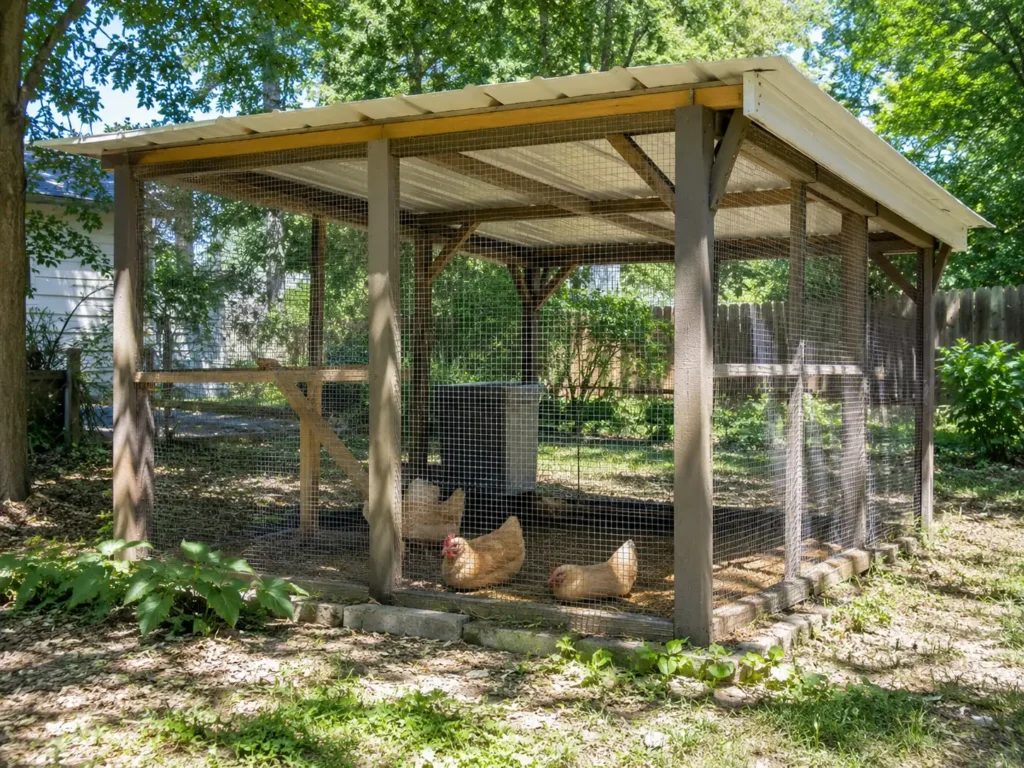
For most backyard flocks in a hot region, a wooden coop with generous mesh ventilation and an attached, roofed run hits the sweet spot. The solid roof gives shade, the open hardware-cloth sides let the breeze through, and the covered run gives birds a shaded place to spend the daytime hours out of the coop entirely. Look for large vent panels on multiple sides, a sloped roof with an overhang, and a design with room to spare for your flock. A light or metal roof is a bonus; if it’s dark, plan to top it.
Brands like OverEZ and similar solid wood coops with good ventilation work well here, especially the models that pair with or include a shaded run. Verify the model and roof before buying.
Hot-weather strengths: built-in shade, strong cross-ventilation, room to spread out. Watch out for: dark stock roofs run hot (add reflective roofing); make sure the run is genuinely shaded.
Check the current price on Amazon →
Best for maximum airflow: an open-air style coop
In the hottest, most humid climates, the open-air approach is hard to beat. These coops keep only a roof and maybe one windbreak wall solid, with the rest screened in half-inch hardware cloth so air moves freely from every direction. Birds sleep in a fully ventilated space and stay far cooler than they would behind solid walls. The tradeoff is that an open-air coop offers less protection in cold or wind, so this is a hot-climate specialist, not an all-rounder.
If you’re somewhere that barely sees a frost, an open, heavily screened coop will serve your flock better through the long summer than any snug, enclosed box.
Hot-weather strengths: the best airflow of any style; birds stay coolest at night. Watch out for: poor cold and wind protection; demands rock-solid hardware cloth and predator-proofing on all those open faces.
Check the current price on Amazon →
Best large walk-in for hot regions
If you keep eight or more birds, a walk-in coop with high, generous ventilation is the move. The extra interior volume and tall vents let hot air rise and escape, you can store feed in the shade, and there’s room to set up fans or extra waterers. Pick a walk-in with vents or windows on opposite walls for cross-flow, a roof you can keep light, and a footprint you can place in afternoon shade. Resist the urge to seal it up: in heat, you want it as open as security allows.
Hot-weather strengths: big air volume, easy high venting, room for fans and extra water. Watch out for: needs a shaded, well-drained spot; check that windows actually create cross-flow.
Check the current price on Amazon →
Best for a small flock (3 to 5 hens)
A compact coop is fine for a few hens in the heat as long as it’s well ventilated and, above all, shaded. The mistake people make with small coops in summer is treating them like a cozy box. You want the opposite: maximum mesh, a raised floor so they can shelter underneath, and placement in shade. Three or four heat-tolerant hens in an airy, shaded little coop ride out summer comfortably.
Hot-weather strengths: easy to place in a shady corner; raised models give a cool hollow below. Watch out for: many small coops are under-ventilated and dark-roofed; fix both before summer.
Check the current price on Amazon →
Best budget option (with a cooling plan)
The cheap flat-pack coops aren’t built for extreme heat any more than they’re built for cold, but you can make one work in summer with a few changes: cut in extra vent openings and cover them with hardware cloth, lay light-colored or reflective material over the dark roof, raise it up on blocks or legs for airflow underneath, and park it in the deepest shade you have. Add a shaded run and you’ve got a workable, affordable setup.
Go in knowing the sticker price isn’t the whole cost, and that the most important upgrade, shade, is free if you have a tree.
Hot-weather strengths: lowest upfront cost; a fine base to modify. Watch out for: stock ventilation is usually too little and the roof too dark; budget time to fix both, and never leave one in full sun.
Check the current price on Amazon →
How to keep chickens cool through summer
The right coop gets you most of the way. These habits cover the rest, and they matter most on the worst days.
Keep cool water everywhere, always
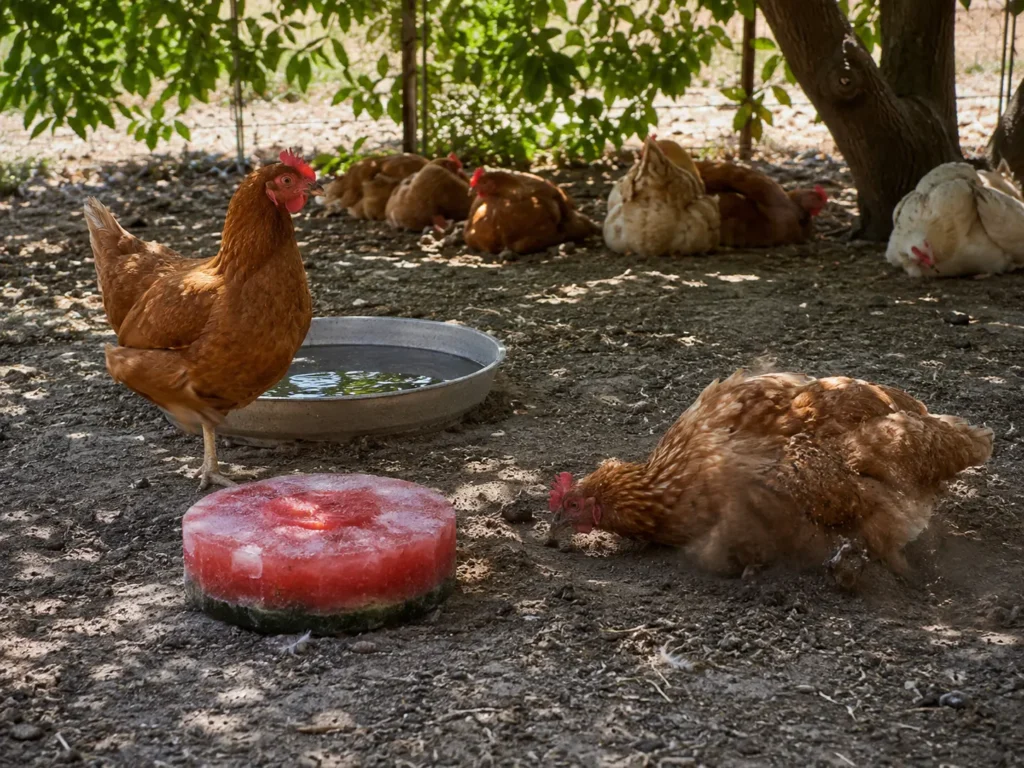
Water is your number one cooling tool. Birds drink far more in heat and will avoid water that’s gone warm and stale, so refresh it often and keep it in the shade. Dropping a few frozen water bottles or a block of ice into the waterer in the morning keeps it cool for hours. Set out more than one waterer so a bullied hen can’t be blocked from drinking. On extreme days, a little poultry electrolyte powder in the water helps birds cope.
Make cool spots they can use
Chickens cool themselves by pressing their bodies against cool ground, so give them somewhere to do it. A patch of shaded, loose dirt for dust bathing, the hollow under a raised coop, or a damp shaded corner all help. A shallow pan of cool water lets some birds stand in it to shed heat through their feet, though not every hen will use one. Frozen treats like chunks of watermelon or frozen peas give them a cool snack and something to do.
Move the air
If your birds have power nearby, a fan aimed through the coop or run makes a genuine difference by moving heat off their bodies, the same way a breeze cools you. Mount it safely out of reach and out of the weather. In very dry climates, a fine mister set up to wet the air (not the birds directly) can drop the temperature noticeably through evaporation. Skip misters in humid climates, where adding moisture to already-thick air does more harm than good.
Learn the warning signs of heat stress
This is the part that saves lives. A bird in heat distress pants with her beak open, holds her wings out and away from her body, and may stand still and listless or stop eating. As it worsens her comb can go pale, she may stagger or lie down and seem unresponsive. If you see a bird in real trouble, act fast: move her to shade and stand her in cool (not ice-cold) water up to her belly, offer cool electrolyte water, and get air moving over her. Cool her down gradually rather than shocking her with ice water. Catching it early is everything.
Collect eggs early and often
Eggs left in a hot nest box can spoil or even start to cook, and a broody hen sitting tight in the heat is at real risk herself. Gather eggs in the morning and again in the afternoon during a heat wave, and gently discourage any hen from staying packed into a stuffy nest box through the hottest hours.
The best chicken breeds for hot climates
Picking the right birds makes hot-weather keeping far easier, and here the rules flip from cold-climate advice. Large single combs, which are a frostbite liability in the cold, are an asset in the heat because that extra bare surface area helps a bird shed warmth. Lighter-bodied, sleeker breeds handle heat better than heavy, fluffy ones.
The Mediterranean breeds are the classic hot-climate choice: Leghorns, Andalusians, Minorcas, and the like are lean, active, large-combed birds bred in warm regions. The Egyptian Fayoumi is famously heat-hardy. Penedesencas and other Mediterranean layers do well too, and naked neck breeds (sometimes called Turkens) tolerate heat unusually well thanks to their bare necks.
On the other end, the birds that struggle most in heat are the heavy, densely feathered breeds and the feather-footed ones: Orpingtons, Brahmas, Cochins, and especially Silkies, whose fluffy plumage traps heat. They can still be kept in hot climates with extra care and shade, but if you’re choosing a flock for a hot region, lean toward the lean, large-combed, light-feathered breeds and you’ll have a much easier summer.
Frequently asked questions
How hot is too hot for chickens? Chickens start to feel real stress as temperatures climb into the 90s Fahrenheit, and sustained heat above roughly 95, especially with humidity, becomes dangerous. There’s no single cutoff, since humidity, shade, water, and breed all change the picture, but treat anything in the mid-90s and up as a day to watch your flock closely and pull out all your cooling tricks.
Do chickens handle heat or cold better? Cold, by a wide margin. A healthy, cold-hardy bird in a dry, draft-free coop handles freezing temperatures easily, while heat can kill a chicken in a matter of hours. If you’re choosing where to put your effort, summer cooling deserves more attention than winter warmth in most hot climates.
Should a hot-climate coop be insulated? Usually not, unless your area also has cold winters. In persistent heat, insulation and closed plastic coops can trap heat, particularly in direct sun. Prioritize shade, open ventilation, and a light roof over insulation.
How much ventilation does a hot-weather coop need? As much as you can safely provide. Open mesh or hardware-cloth panels on multiple sides for cross-ventilation are ideal, far more than the high vents you’d use in a cold climate. Just make sure every opening is secured against predators.
What are the signs my chicken is overheating? Open-beak panting, wings held out from the body, pale comb, lethargy, and refusing food are the main signs. A severely overheated bird may stagger or collapse. Move her to shade, cool her in tepid water, and offer electrolyte water right away.
Will my hens lay fewer eggs in the heat? Often yes. Heat stress can slow or pause laying, and you may see thinner shells, since hens pant off the carbon dioxide their bodies use to build strong shells. Keeping them cool, hydrated, and calm helps production hold up through summer.
The one thing to get right
If you take away a single idea, make it this: in a hot climate your coop’s whole purpose is shade and airflow, in that order. Get the birds out of the sun and keep air moving through their space, give them endless cool water and a cool spot to flop in, and choose breeds built for the heat, and your flock will doze through summer instead of suffering in it. The coop you buy just needs to make shade and ventilation easy. Pick one that does, set it up the way we covered, and you can stop dreading the forecast.