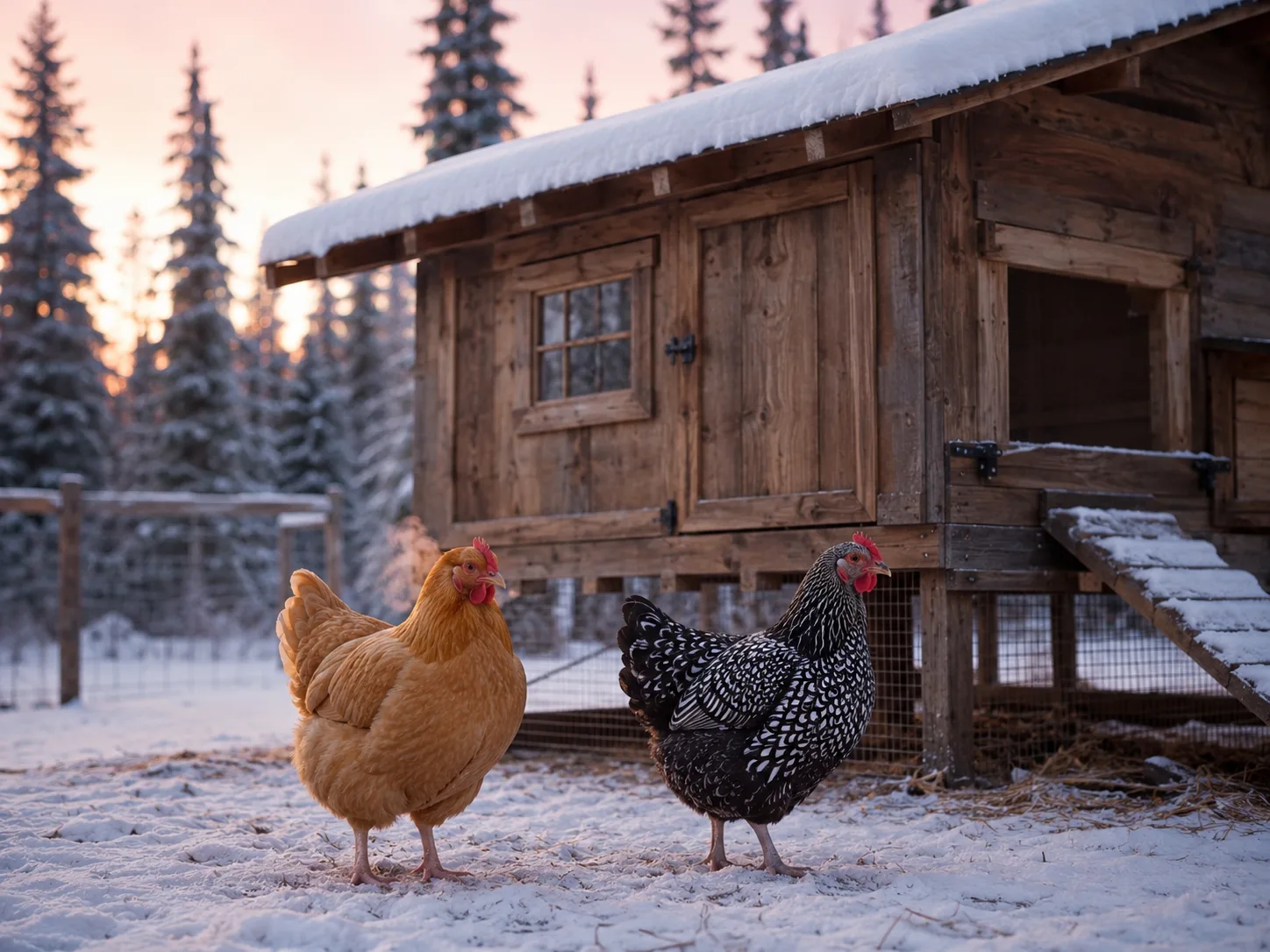
The first winter I kept chickens, I got almost everything wrong. I stapled plastic sheeting over every gap to block the wind, clipped a heat lamp to the rafters for the worst nights, and felt pretty good about it. Then one morning in January I found my friendliest hen, a Barred Rock named Pidge, with the tips of her comb gone black. Frostbite. In a coop I had basically sealed shut to keep her warm.
That hen was fine, for the record. The comb tips dried up and fell off and she laid eggs for four more years. But she taught me the one thing nobody bothers to tell beginners: cold, by itself, almost never hurts a healthy chicken. What hurts them is damp, stale air with nowhere to go. Seal a coop up tight and you trap all the moisture from their breath and their droppings, and that moisture is what freezes combs and rots respiratory systems.
So before you spend a few hundred dollars on a coop, it helps to know what you’re actually shopping for. This guide walks through what makes a coop work in a cold climate, then gives you honest picks for different flock sizes and budgets, and finally covers how to set the thing up so your birds sail through winter. I’ve kept hens through more than a decade of northern winters, and most of what follows is stuff I learned the hard way so you don’t have to.
Some links below are affiliate links. If you buy through one, I may earn a small commission at no extra cost to you. As an Amazon Associate I earn from qualifying purchases. I only point to gear I’d actually put my own birds in.
Cold isn’t the enemy. Moisture is.
Chickens are walking down comforters. A healthy hen sits on a layer of fluffy down, tucks her feet up under her body, and pulls her head into her feathers. Most standard breeds are comfortable well below freezing, and plenty of cold-hardy breeds shrug off single digits without blinking. People in Alaska and the Dakotas keep chickens through winters that would scare a sled dog.
Here’s the part that trips everyone up. Chickens give off a surprising amount of water. They breathe it out, and their droppings are roughly three-quarters water. In a closed-up coop, all of that humidity has nowhere to escape, so it hangs in the air and settles on combs, wattles, and toes. When that damp skin hits a cold night, you get frostbite. The irony is brutal: people seal coops to prevent cold injury and end up causing it.
The second problem with stale air is ammonia. Droppings break down and release ammonia gas, and in a poorly vented coop it builds up fast. If you stick your head in your coop in the morning and your eyes sting or it smells sharp, your birds have been breathing that all night at beak level, which is much closer to the litter than your nose. Ammonia damages the lining of their airways and opens the door to respiratory illness.
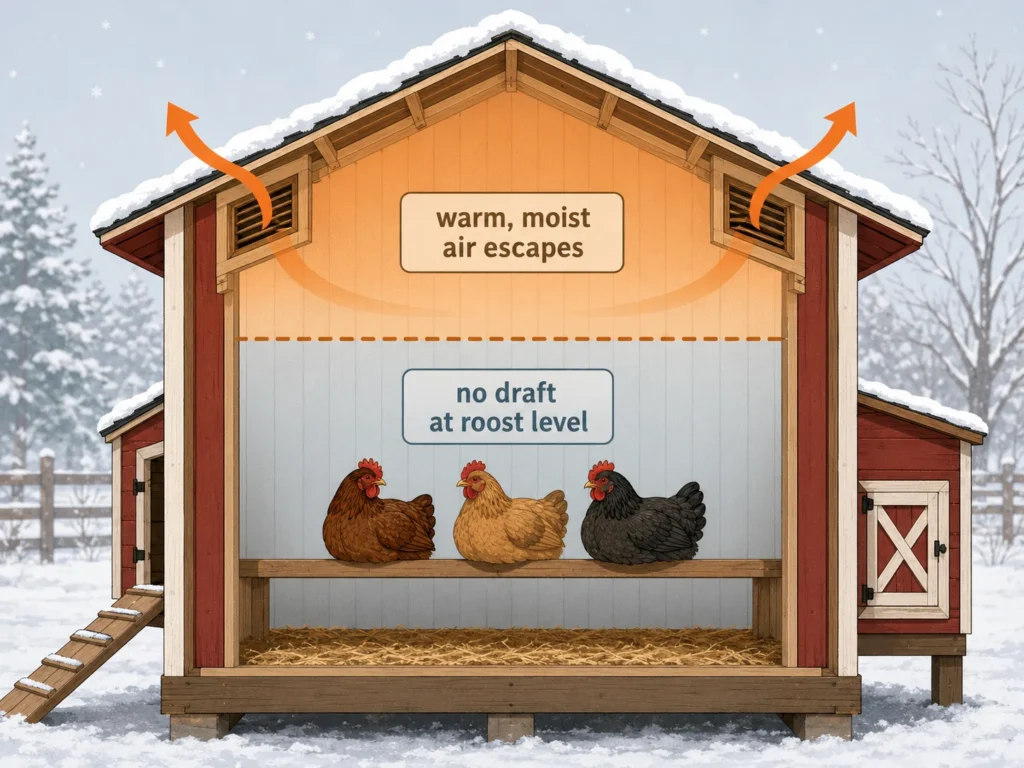
So the whole game in a cold climate comes down to one balancing act. You need enough ventilation to let warm, moist, smelly air rise up and out, but you cannot have a draft blowing directly across the roosting birds at night. Ventilation good. Draft bad. Once that clicks, every coop decision gets easier.
What to look for in a cold-climate coop
A coop that works in Phoenix can be a death trap in Vermont, and the differences are not always obvious from a product photo. These are the features that actually matter when the temperature drops.
Ventilation up high, not down low. You want vents, gaps, or adjustable openings near the roofline, above the height where your birds roost. Warm moist air rises, so high vents let it leave without chilling the birds below. A coop with only low vents, or one where the only airflow comes from the pop door, will hold moisture. The best cold-climate coops let you open and close vents so you can dial airflow up on mild days and down on bitter ones.
Solid construction that blocks drafts at roost level. The walls around where your hens sleep should be solid, snug, and free of gaps that let wind cut through. This is different from insulation. You’re not trying to make the coop airtight, you’re trying to make sure the air around the roost is still while the air up top moves. Thin, rattly prefab panels with daylight showing through the seams are the usual culprits here.
The right size for winter, not just summer. A coop that feels roomy in July can be too big to feel cozy in January, and an oversized coop is harder for the birds’ body heat to take the edge off. On the flip side, cramming too many birds into a tight box and then closing it up guarantees a moisture problem. Aim for about 4 square feet of coop floor per standard hen, with more space in the attached run since they’ll spend more daytime hours sheltering. Quality over square footage.
Flat roosting bars. This one is small and it matters a lot. You want roosts made from a 2×4 laid flat, wide side up, not a round dowel or a skinny perch. On a flat bar a hen can settle down and completely cover her feet with her body and feathers. On a round roost her toes wrap around and stay exposed to the cold air, and frostbitten toes are common in birds that roost on broom handles and tree branches. If a coop ships with round dowel roosts, plan to swap them.
A snug, predator-proof pop door. Winter is hungry season. Raccoons, foxes, weasels, and hawks all get bolder when food is scarce, and a determined raccoon can open a simple latch. Look for a pop door that seals reasonably well against wind and locks securely. Plenty of keepers in cold country add an automatic door so the coop closes itself at dusk even when you don’t want to walk out in the snow.
A roof that sheds snow and rain. A sloped roof with a bit of overhang keeps snow load down and stops meltwater from running into the coop. Flat-topped coops can sag or leak under heavy snow, and a leak in winter is exactly the moisture problem you’re trying to avoid.
Easy access for cold-weather chores. You will be doing chores in gloves, in the dark, possibly in a blizzard. A coop you can open, refill, and clean from outside without crawling in is worth a lot in February. Big doors, removable droppings trays, and external nest box access all earn their keep.
The best chicken coops for cold climates
A quick honesty note before the picks: coop models and listings change often, so confirm the current size, materials, and price before you buy, and match the coop to your real flock size. These are the categories that matter and the kind of coop that fills each one well.
Best overall for cold climates: a solid-wood coop with adjustable vents
For most backyard flocks in a cold region, a well-built wooden coop is the sweet spot. Real wood walls block drafts and hold a little ambient warmth far better than thin plastic or sheet-metal prefabs, and wood gives you something solid to screw vents, hardware cloth, and an automatic door into. Look for tongue-and-groove or solid panel construction (not flimsy thin board), a sloped asphalt-shingle or coated roof, vents you can open and close near the top, and a design rated for a hand or two more birds than you actually keep.
Brands like OverEZ and similar solid-pine coops are built for this kind of duty and tend to outlast the bargain options by years. Verify the model size against your flock.
Cold-weather strengths: solid draft-blocking walls, sturdy roof, room to add winter upgrades. Watch out for: real wood costs more and is heavier to move; you may still want to swap round roosts for flat 2x4s.
Check the current price on Amazon →
Best insulated pick: Omlet Eglu Cube
If you want the lowest-fuss cold-weather coop and don’t mind paying for it, the Omlet Eglu Cube is the one I point people to. It’s made of twin-wall plastic, similar in idea to double-glazed glass, so the air gap helps buffer temperature swings without you adding a thing. The ventilation is built in and designed to move air without blowing across the roost, the smooth plastic doesn’t harbor mites the way wood crevices can, and you can hose the whole thing out, which is a genuine relief on a thaw day in March.
It is expensive, and assembly takes patience. But for small flocks in a hard climate, it removes most of the moisture-management guesswork.
Cold-weather strengths: twin-wall insulation, draft-controlled venting, mite-resistant, easy to clean. Watch out for: high price; smaller capacity than it looks; plastic feels less “homestead” if that matters to you.
Check the current price on Amazon →
Best large walk-in for cold regions
If you keep eight or more birds, or you just want to do chores standing up instead of stooping, a walk-in wooden coop is the move in cold country. The extra height makes high ventilation easy to set up, you can store feed and bedding inside out of the snow, and you can actually get in there to refresh deep litter without contorting yourself. A walk-in also makes it practical to use the deep litter method (more on that below), which adds a bit of passive warmth.
Pick a model with a proper sloped roof and vents you can manage from inside, and resist the urge to go cavernous: a walk-in sized for far more birds than you have will feel cold and damp.
Cold-weather strengths: standing-height chores, easy high venting, room for deep litter and storage. Watch out for: footprint and price; needs a level, well-drained spot.
Check the current price on Amazon →
Best for a small flock (3 to 5 hens)
A lot of people start with a handful of hens, and a compact solid-wood coop is plenty as long as it’s built tight and vented up top. The key with small coops is to not let “small” turn into “sealed.” You still need that high vent, and you want enough roost length that the birds can huddle together but aren’t packed wall to wall. Three or four cold-hardy hens generate a cozy amount of shared body heat in a snug, dry coop.
Cold-weather strengths: body heat concentrates well in a right-sized box; affordable; easy to site. Watch out for: many small prefabs skimp on ventilation and use round roosts; check both.
Check the current price on Amazon →
Best budget option (with a winterizing plan)
I won’t pretend the cheap flat-pack coops are great. The walls are thin, the wood is often little better than fence pickets, and the hardware is flimsy. But if budget is the deciding factor, you can make one work in a cold climate with a weekend of upgrades: add a high vent covered in hardware cloth, screw down flat 2×4 roosts, reinforce or replace the latches, and run thick deep litter. You’ll spend a bit more than the sticker price, but you can get a flock through winter safely.
Just go in with eyes open. A bargain coop is a starting point you improve, not a finished product.
Cold-weather strengths: lowest upfront cost; fine as a project base. Watch out for: thin walls, weak predator security, poor stock venting; budget time and a little money to fix all three.
Check the current price on Amazon →
How to winterize any coop
The coop is half the equation. How you set it up is the other half, and these habits matter more than any single product.
Get the ventilation right
Open or add vents near the top of the coop, and cover them with half-inch hardware cloth so nothing climbs in. On a calm night you want to feel a gentle exchange of air up high and dead-still air down at the roost. If you can hold a candle or a bit of tissue at roost height and it barely moves while smoke rises and leaves up top, you’ve nailed it. Resist the instinct to close everything when a cold snap hits. That’s exactly when moisture builds fastest.
Use flat roosts and let them huddle
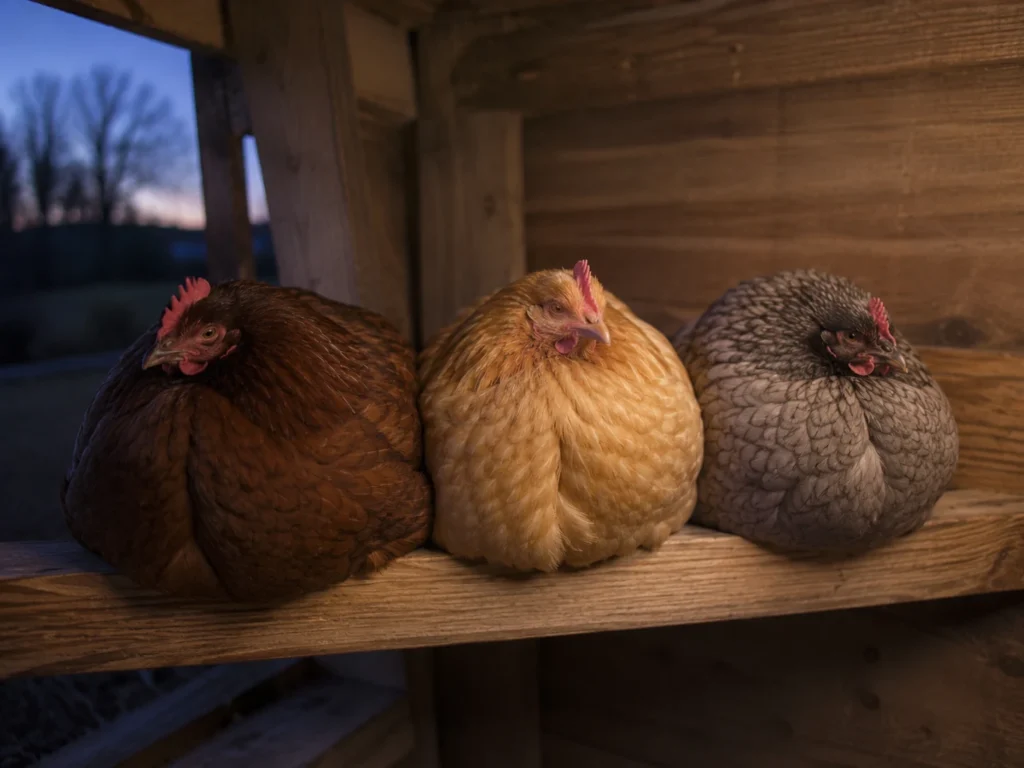
Set your roosts as flat 2x4s, wide face up, and position them away from any direct vent airflow. Give the birds enough length to sit shoulder to shoulder so they can share heat, but don’t crowd them so tight that the dominant hens push others off into the cold corners. Birds that can cover their feet and lean on a neighbor stay remarkably warm.
Try the deep litter method
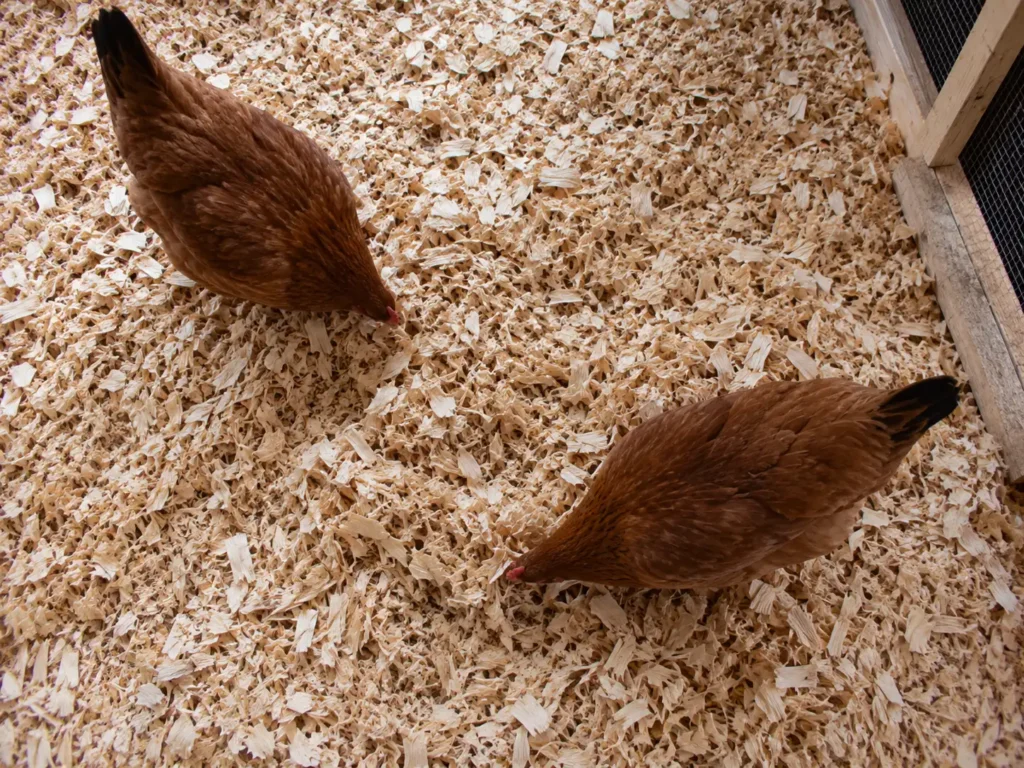
Instead of stripping the coop bare every week, deep litter lets bedding and droppings slowly compost in place over the winter. You start with several inches of pine shavings, add a fresh handful whenever it looks damp or smells off, and turn it occasionally. Done right it stays dry and earthy-smelling, breaks down odor naturally, and the composting action gives off a little gentle heat from the floor. It also means far less freezing-cold cleaning in January. Done wrong (too wet, not enough carbon material) it gets soggy and smelly, so keep adding dry shavings and keep that top vent open.
Win the water battle
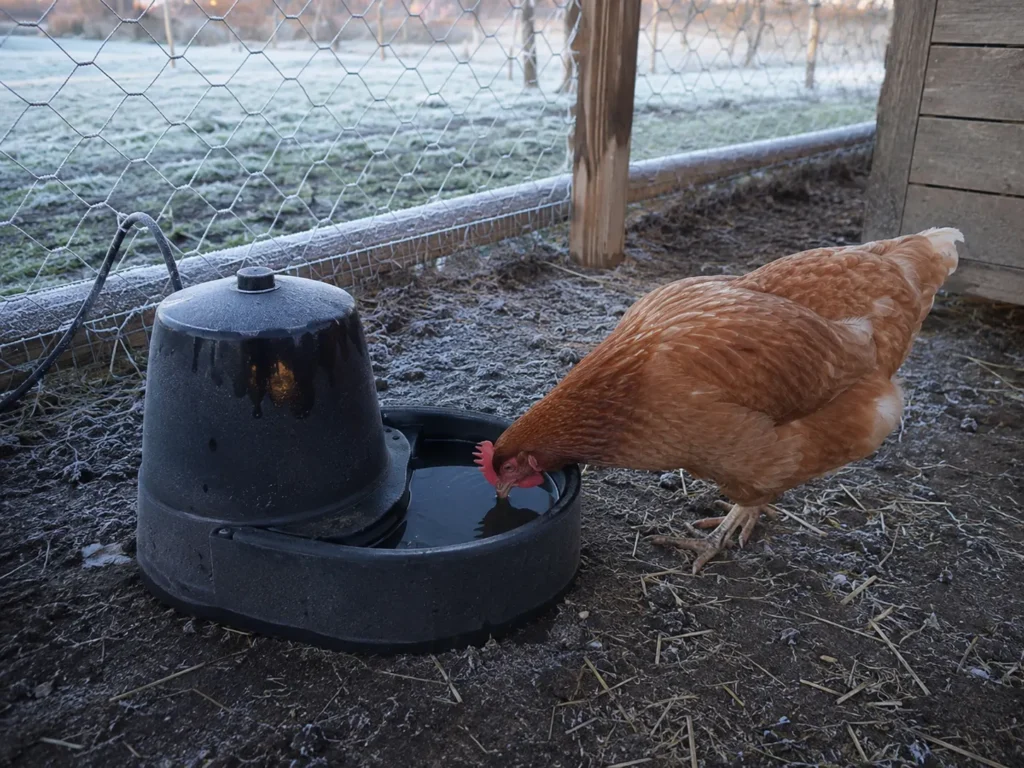
Frozen water is the single most annoying part of winter chicken keeping. Birds need liquid water daily, and a regular waterer turns to a block of ice fast. A heated poultry waterer or a heated base under a metal waterer solves it and saves you hauling warm water out three times a day. Keep the waterer in the run or just outside the coop rather than inside if you can, since an open water source adds humidity to the very air you’re trying to keep dry.
Prevent frostbite on combs and wattles
Big single-comb breeds (like Leghorns) are most prone to frostbitten combs, while breeds with small pea or rose combs (like Wyandottes, Ameraucanas, and Brahmas) handle cold far better. If you’re still choosing birds for a cold climate, lean toward the small-combed, heavy, cold-hardy breeds. For combs you already have, the best prevention is dry air, which loops right back to ventilation. Some keepers rub a thin layer of plain petroleum jelly on large combs before a hard freeze, though honestly, a dry draft-free coop does more than any balm.
Should you heat the coop? Almost always, no.
This is the question everyone asks, so here’s my straight answer: skip the heat lamp. I mean it. Heat lamps are a leading cause of coop and barn fires, every winter, because a single feather or a bird knocking the lamp loose can set dry bedding ablaze in seconds. Beyond the fire risk, a heated coop keeps your birds from acclimating to the cold, so if the power goes out during a storm (exactly when it tends to), unacclimated birds can be in real danger overnight. Healthy, dry, draft-free chickens grow their own winter coats and do fine.
If you genuinely live somewhere brutal and feel you must add heat, use a flat radiant panel heater designed for coops rather than a bulb, mount it where birds can’t touch it, and treat it as a mild edge-taker, not a furnace. For the vast majority of keepers in normal cold climates, the money is better spent on ventilation, good roosts, and a heated waterer.
Frequently asked questions
How cold is too cold for chickens? Most healthy, cold-hardy hens stay comfortable down into the teens and single digits Fahrenheit, and many tolerate below zero in a dry, draft-free coop. The temperature on the thermometer matters less than whether the air is dry and still around the roost. Wet or drafty conditions cause trouble long before the cold alone would.
Do chickens need a heated coop in winter? Generally no. A dry, well-ventilated, draft-free coop is far safer and healthier than a heated one, and heat sources add fire risk and prevent birds from acclimating. Focus on keeping moisture out and let your flock grow their winter feathers.
Should I insulate my chicken coop? Insulation can help in extreme climates, but only if it doesn’t choke off ventilation, and only if it’s sealed so birds and rodents can’t pick at it. Most keepers get better results from solid walls, good high vents, and deep litter than from stuffing insulation into a coop they then close up tight.
How much ventilation does a winter coop need? More than most beginners think. You want a steady exchange of air up high near the roof, even in the cold. A good rule of thumb is roughly 1 square foot of vent opening per 10 square feet of floor, placed above roost level and screened with hardware cloth.
What’s the best bedding for a cold coop? Pine shavings are the standard and work well, especially with the deep litter method, which adds a little passive warmth as it composts. Avoid cedar shavings (the oils can irritate chicken airways) and keep whatever you use dry by adding fresh material and maintaining ventilation.
Will my hens stop laying in winter? Many do slow down or pause, mostly because of shorter daylight rather than the cold. That’s natural and gives their bodies a rest. Some keepers add a little supplemental light to keep eggs coming, while others let the birds take the season off.
The one thing to get right
If you remember nothing else from this, remember that a good cold-climate coop is dry, draft-free at the roost, ventilated up high, and sized to fit your flock snugly. Get those four things right and your chickens will handle winter far better than you expect, frostbite stays rare, and your morning chores stay sane. The coop you choose just needs to make those four things easy to pull off. Pick one that does, set it up the way we covered, and you can stop worrying and start enjoying fresh eggs in the snow.